
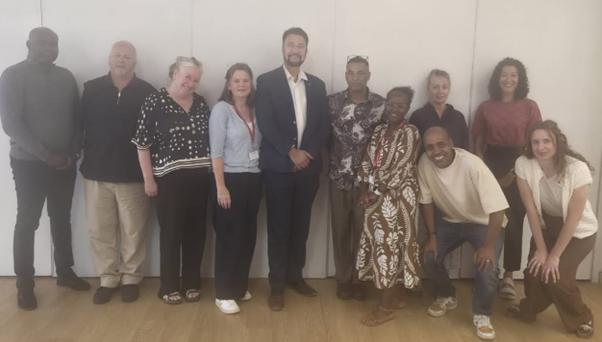
Manchester Refugee Support Network (MRSN) recently hosted a roundtable discussion with Afzal Khan MP, bringing together key organisations from across Greater Manchester’s refugee and asylum sector to share frontline insight on how the immigration system could work better for everyone. The feedback gathered has now been formally delivered to the Rt Hon Anna Turley MP, the newly appointed Minister of State at the Home Office, in a letter dated 4th August 2026.
A Roundtable Rooted in Lived Experience
The roundtable was originally arranged for Alex Norris MP, the previous Minister of State, following productive discussions between him and Afzal Khan about how to make the immigration system both effective and humane. Although Norris was unable to attend after being appointed Justice Secretary shortly before the meeting, the roundtable went ahead as planned in Afzal Khan’s constituency.
MRSN was proud to host the discussion, which brought together Refugee Action, Greater Manchester Immigration Unit, British Red Cross, Asylum Matters, Boaz Trust, Rainbow Heaven, and Step Change Consortium — a cross-section of organisations working directly with refugees and asylum seekers every day. Together, the group identified three core problems with the current system and put forward practical solutions for each.
Three Key Concerns Raised
Barriers to integration. Attendees agreed that the current system, with its focus on enforcement and control rather than integration, makes it harder for people to settle, work, learn English, and build a life in their communities. Constant changes to policy also place a heavy burden on organisations, who must repeatedly update guidance and resources — effort that could be better spent on long-term, integration-focused reform.
The rise of online misinformation. Organisations expressed deep concern about false claims circulating online about refugees and asylum seekers, from myths about preferential access to housing and benefits to unfounded links to crime. These narratives, often spread in bad faith, have contributed to real-world tension and violence in communities. The group called on the Home Office to take a more proactive role in countering this misinformation and protecting migrants from its consequences.
Siloed policy making. Participants argued that immigration policy is too often made in isolation, without consideration of its knock-on effects on other areas such as homelessness. They pointed out that tougher restrictions on asylum have, in their experience, driven increases in rough sleeping among asylum seekers — directly undermining the Government’s own commitment to ending it. The group voiced strong support for greater devolution of decision-making, highlighting Greater Manchester’s track record of working with the Combined Authority on place-based solutions, and their readiness to continue that partnership with national government.
Sharing the Message with Government
Following the roundtable, Afzal Khan MP wrote directly to Minister Turley to welcome her to the role and pass on the sector’s feedback, describing it as “vital to consider as you settle into your new role.” The letter set out each of the three concerns and the proposed solutions in detail, and extended an open invitation for the Minister to visit the constituency and hear directly from the organisations involved.
MRSN would like to thank Afzal Khan MP for his continued engagement with the sector, and all participating organisations for lending their expertise to this important conversation. We remain committed to working with local and national government to build an immigration and asylum system that is fair, effective, and centred on the wellbeing of the people it affects.